
Exploring Jaipur’s Amer Fort
(This article has affiliate links to products which we may make commission from at no extra cost to you.)
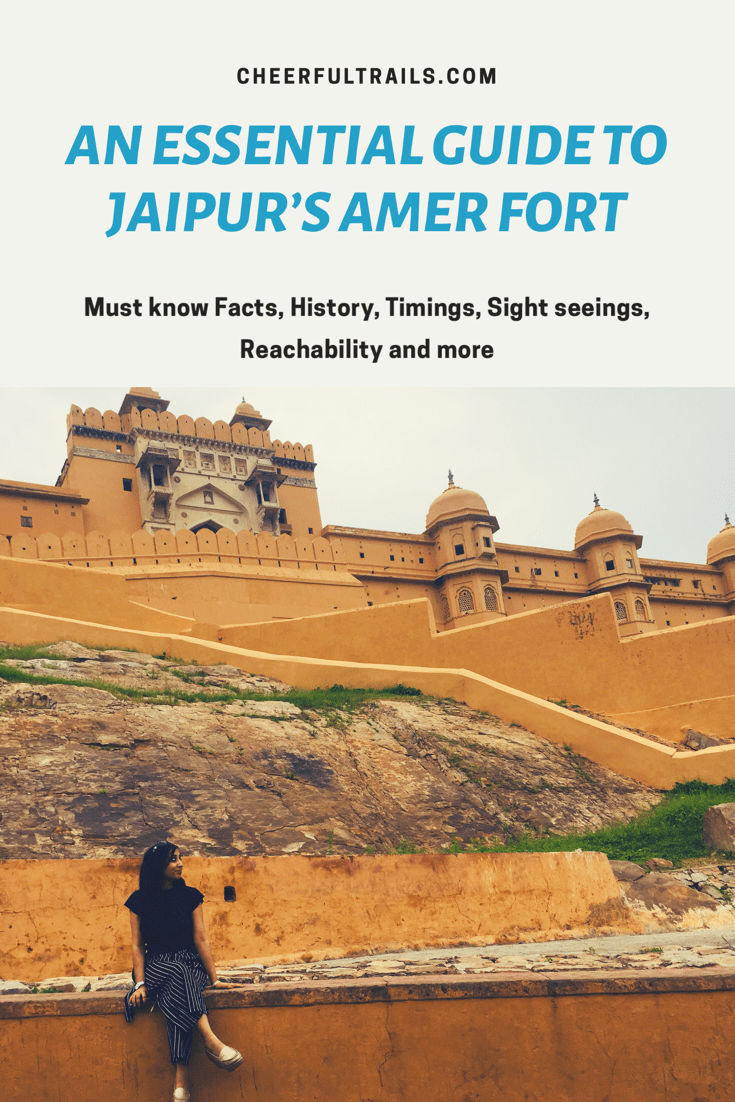
Rajasthan is well known for its majestic forts and palaces, which exhibit the power and grandeur of the era of ruling royal kingdoms. Many such forts have been declared UNESCO World Heritage sites. One such fort is the Amer Fort, located in the town of Amer, just 11 km from Jaipur.
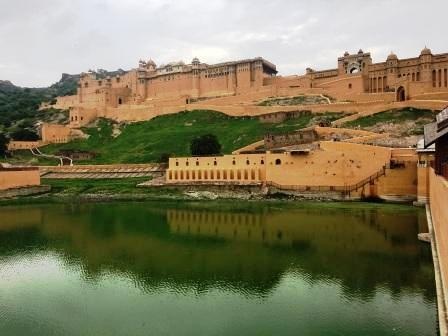
I have been to Amer Fort twice and have experienced several amazing things on every visit. I have been smitten by this magnificent fort from several viewpoints. My favorite one is the point from which the fort overlooks Maota Lake and the saffron garden. Many tourists also refer to Amer Fort as Amber Fort.
History of the Amer Fort
Amer was originally the capital of Rajasthan until the 18th century. The Amer Fort or Amber Fort was constructed in the 16th century by Raja Man Singh I who was one of the Navratnas (nine gems) of the Mughal Emperor Akbar.
It was further expanded and renovated by Raja Singh I and other successive rulers. Amer Fort had served as a royal residence to Rajput rulers until Jaipur was declared as the Capital of Rajasthan.
Architecture of Amer Fort
The Amer Fort is built of red sandstone and marble. It is a perfect blend of the outlooks of the Rajput (Hindu) and Mughal (Islamic) architectures. It has a grand layout comprising royal courtyards, temples, palaces, gardens, and chambers.
This fort’s spectacular architecture will leave you completely spellbound by its beauty.
Visiting Today: What to Do in Amer Fort
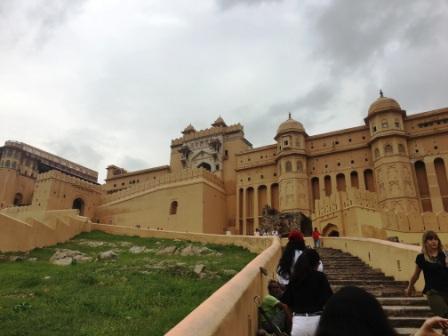
Once you reach the parking or the drop-off point of Amer Fort, you can either climb the stairs to reach the fort or drive up to the fort.
I preferred climbing up to the fort because of the perfectly fine weather and the beautifully surrounding views. If you are also keen on climbing up to the fort make sure you are in your comfortable shoes because there are a lot of stairs up to there.
However, you can also reach the fort entrance directly by your car. The main entrance of the fort is through Suraj Pol (Sun Gate).
Now, let’s have a look at the major sightseeing places that you should not miss out on in this palace.
Jaleb Chowk
The entrance of the fort will lead you into the main courtyard of Jaleb Chowk. This is the place that used to be the major assembly area for the soldiers of the royal military force.
This courtyard covers a vast area where many important parades and declarations for the military forces took place. From here you can purchase tickets for further viewing of the fort.
The main palace starts after you climb the stairway from this courtyard which would lead you to the second courtyard.

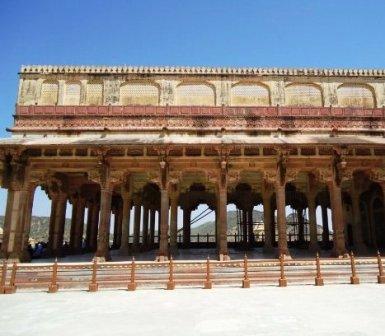
Diwan – e – Aam (Public Audience Hall):
As the name suggests, Diwan-e-Aam is where the ruler used to address and hear the petitions from common people. This hall stands on a raised platform having evenly built pillars made of marble and red stone.
Ganesh Pol
Ganesh Pol is a very exquisitely decorated entrance gate to the third courtyard which houses the private premises of the ruler. It is named after Lord Ganesha who is a symbol of wisdom and new beginnings.
As you pass through Ganesh Pol, you will see a beautiful Mughal-style garden separating two buildings, one is Sheesh Mahal and the other is Sukh Niwas.

Sheesh Mahal
Sheesh Mahal is the most amazing part of Amer Fort. The walls and ceilings are decorated with intricate mirror works and colored glasses. The women of the palace were not allowed to go outside in the night.
The ruler called out for the finest architects to build Sheesh Mahal with mirror work. The women used to light one candle during the night in Sheesh Mahal, the spark reflected on the ceilings making it look like the night sky full of twinkling and sparkling stars.
On top of the Sheesh Mahal is the Jas Mandir which was a place for relaxation for the ladies of the palace. This part of the palace is also very beautifully designed and decorated with floral patterns and mirror works.

Magic Flower
The magic flower is a floral pattern designed in one of the pillars of Sheesh Mahal. It has a very unique feature of having seven different designs depictions from a single flower.
It unfolds designs of a lotus, a fishtail, a hooded cobra, an elephant’s trunk, a lion’s tail, a scorpion, and a cob of corn each time when partially covered by both hands. The magic flower is one of the rare things you come across while visiting such forts and palaces.
Sukh Niwas
Sukh Niwas was where the ruler used to relax and spend time with his ladies. It is also beautifully decorated with ornate carvings.
There is a channel from where a piped supply of water flows into the garden keeping the atmosphere within Sukh Niwas cool and airy. This used to be an ancient technique to maintain the environment within the quarter’s air condition.

Zenana
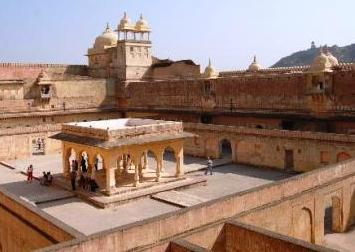
Further is the fourth courtyard comprising Zenana, which is the area where the women of the palace resided. Zenana had separate rooms for each queen.
Each room had a private passage to the king’s room. The king would visit the queen he wished to spend time with through one of those passages.
Kesar Kyari
Kesar Kyaari is a very scenic and picturesque garden of saffron built over the Maota Lake. It is said that saffron plants were used to be planted here by the king in the 15th century.

Sila Devi Temple
The king found the deity from a seabed after being instructed by the Goddess Kali in his dream. After the king won a war against Bengal, his belief became strong and he then installed the deity in the temple and called it Sila Devi.
During a Hindu festival Navratri, the royal family used to sacrifice a goat’s life and offer prayers for the goodwill of their kingdom. However, this practice was stopped under a law in 1975.
This temple has an entrance through a double door made of silver and can be reached through a flight of stairs from Jaleb Chowk.
The Sila Devi temple is the most visited part of the fort and remains crowded due to a large number of devotees visiting it to offer their prayers.
Light and Sound Show
The Amer Fort illuminates beautifully during the evening hours. It has an amazing light and sound show near Kesar Kyari showcasing the history of Amer Fort and the culture of the people of Amer.
There are two shows every night, Hindi and English. The Hindi version starts at 8 PM and the English version at 7:30 PM.
Best Time To Visit Amer Fort
The best time to visit Amer Fort is during the winter season which falls between October and February.
Weather during the monsoon time during Mid July till September is also good and bearable.
The summer season between March and June must be avoided because they are very hot and extreme.
How to Reach Amer Fort
Amer Fort is located at a distance of 11 km from Jaipur. You can easily hire a cab from Jaipur city to reach Amer fort.
The cost of the cab depends on where you are picking it minimum being Rs. 150.
However, if you are visiting Hawa Mahal in Jaipur, you can catch a bus from there that will take you to Amer for just Rs. 18.
Opening Time Of Amer Fort
Amer Fort is open for visitors every day from 8 AM to 5:30 PM. It re-opens at 7 PM for the light and sound show.
Ticket Prices for Amer Fort
The ticket price for Amer Fort is Rs 100 for Indians and Rs 500 for foreigners. There are also composite tickets available at the counters here costing Rs 300 for Indians and Rs 1000 for foreigners. This ticket is valid for two days and you can visit any fort including Amer Fort, Jantar Mantar, City Palace, Nahargarh Fort, Albert Hall, and Hawa Mahal.
Have you been to the Amer Fort in Jaipur? Do share your experience/opinion here, I would love to hear from you 🙂
Feeling inspired? Explore more destinations with us on Cheerful Trails.
Don’t Forget To Share And Save This Post For Later <3
I have always wanted to visit a palace with a fort and check out the history. I am not close to doing that anytime soon though. This seems like a good place to start, and affordable, too.
I always thought Jaipur would be a great place to visit. You gave a lot of great info on the place and photos!